

NimabTM
Nivolumab Injection
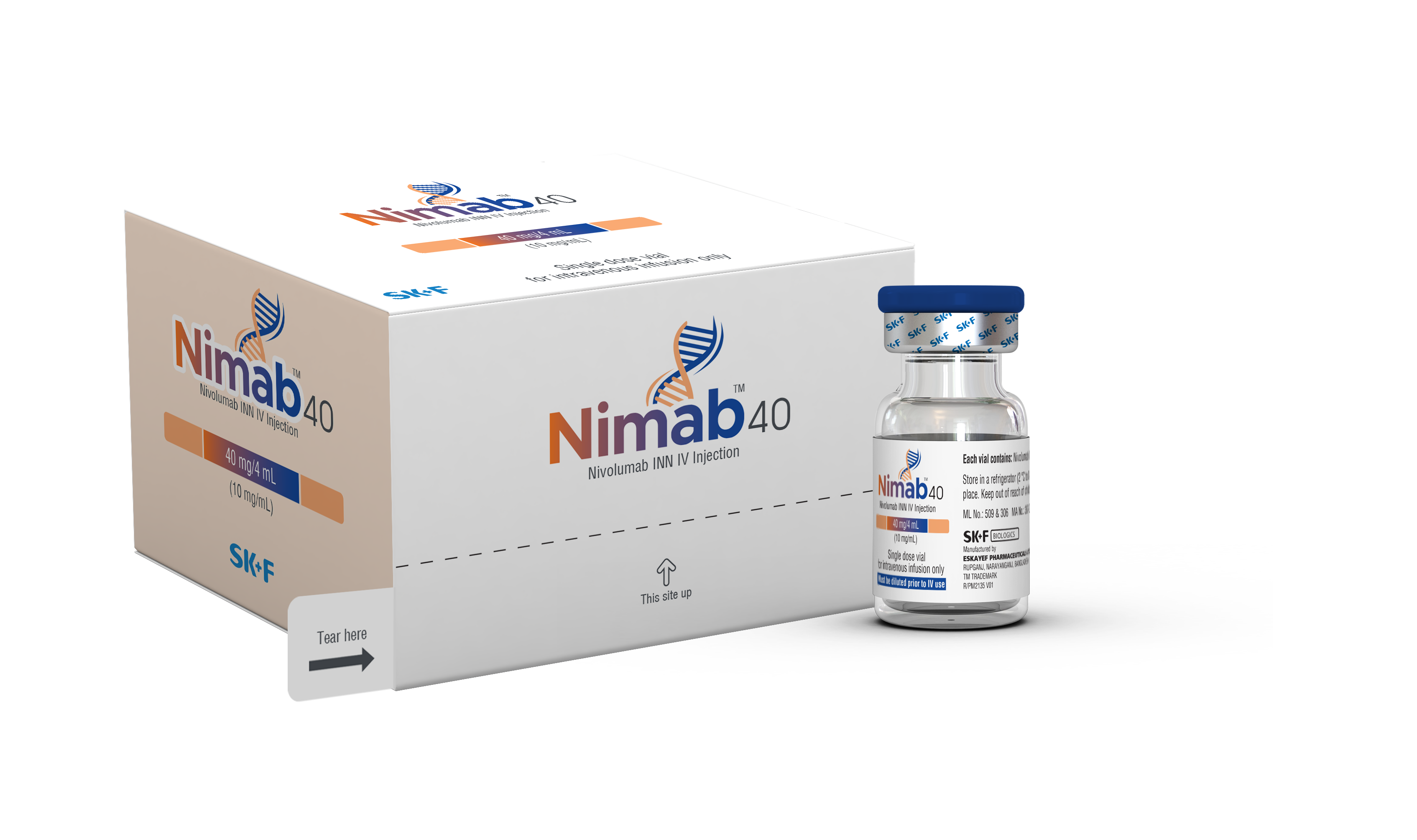
Brand Name:
NimabTM
Generic Name:
Nivolumab Injection
Strength:
40 mg/4 mL
Description:
Solution/concentrate for intravenous infusion
Pack Size:
1's
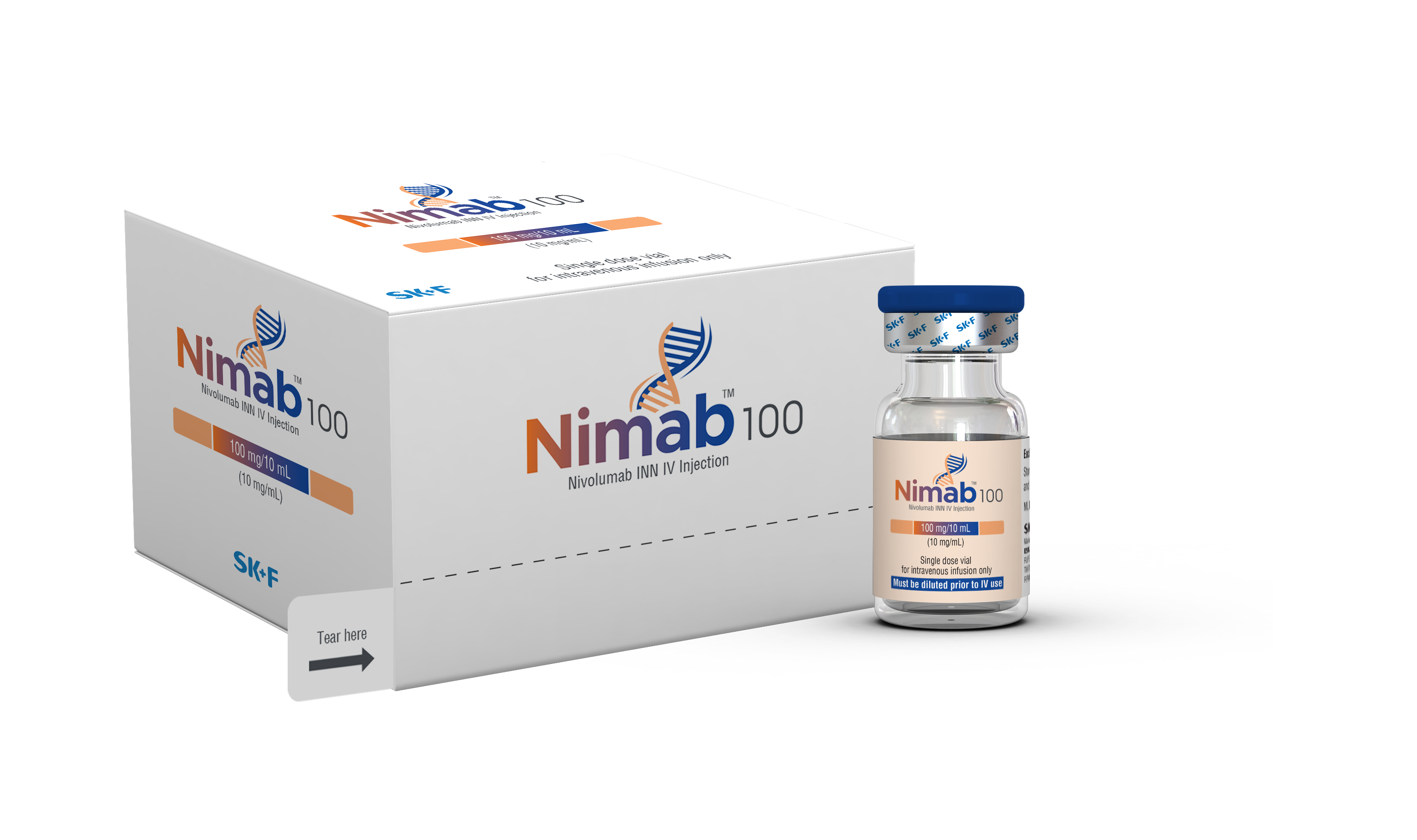
Brand Name:
NimabTM 100mg
Generic Name:
Nivolumab Injection
Strength:
100 mg/10 mL
Description:
Solution/concentrate for intravenous infusion
Pack Size:
1's
* Storage Conditions: Store the vial under refrigeration at 2°C to 8°C (36°F to 46°F). Do not freeze. Do not shake. Keep the vial in the original carton/package to protect from light until time of use. After dilution, the prepared infusion solution may be stored at room temperature at 20°C to 25°C (68°F to 77°F) for no more than 8 hours from preparation to the end of infusion, or under refrigeration at 2°C to 8°C (36°F to 46°F), protected from light, for no more than 7 days from preparation to the end of infusion. Discard unused portion.
FDA Approved Indications
Nivolumab is indicated for the treatment of:
-
Melanoma:
- o As a single agent or in combination with ipilimumab for adult and pediatric patients 12 years and older with unresectable or metastatic melanoma
- o As adjuvant treatment for adult and pediatric patients 12 years and older with completely resected Stage IIB, Stage IIC, Stage III, or Stage IV melanoma
- Non-Small Cell Lung Cancer (NSCLC): o In combination with platinum-doublet chemotherapy as neoadjuvant treatment of adult patients with resectable NSCLC
- o In combination with platinum-doublet chemotherapy as neoadjuvant treatment followed by single-agent nivolumab as adjuvant treatment after surgery in selected adult patients with resectable NSCLC
- o In combination with platinum-doublet chemotherapy as neoadjuvant treatment followed by single-agent nivolumab as adjuvant treatment after surgery in selected adult patients with resectable NSCLC
- o In combination with ipilimumab as first-line treatment of adult patients with metastatic NSCLC expressing PD-L1 and no EGFR or ALK genomic tumor aberrations
- o In combination with ipilimumab and platinum-doublet chemotherapy as first-line treatment of adult patients with metastatic or recurrent NSCLC with no EGFR or ALK genomic tumor aberrations
- o As a single agent for adult patients with metastatic NSCLC with progression on or after platinum-based chemotherapy
-
Malignant Pleural Mesothelioma:
- o In combination with ipilimumab as first-line treatment of adult patients with unresectable malignant pleural mesothelioma
-
Renal Cell Carcinoma (RCC):
- o In combination with ipilimumab as first-line treatment of adult patients with intermediate or poor risk advanced RCC
- o In combination with cabozantinib as first-line treatment of adult patients with advanced RCC o As a single agent for adult patients with advanced RCC who have received prior anti-angiogenic therapy
-
Classical Hodgkin Lymphoma (cHL):
- o In combination with doxorubicin, vinblastine, and dacarbazine (AVD) for adult and pediatric patients 12 years and older with previously untreated Stage III or IV cHL
- o As a single agent for adult patients with cHL that has relapsed or progressed after autologous HSCT and brentuximab vedotin, or after 3 or more lines of systemic therapy including autologous HSCT
-
Squamous Cell Carcinoma of the Head and Neck (SCCHN):
- o For adult patients with recurrent or metastatic SCCHN with disease progression on or after platinum-based therapy
- Urothelial Carcinoma: o As adjuvant treatment of adult patients with urothelial carcinoma who are at high risk of recurrence after radical resection
- o In combination with cisplatin and gemcitabine as first-line treatment of adult patients with unresectable or metastatic urothelial carcinoma
- o As a single agent for adult patients with locally advanced or metastatic urothelial carcinoma with disease progression during or following platinum-containing chemotherapy, or within 12 months of neoadjuvant or adjuvant platinum-containing chemotherapy
-
Microsatellite Instability-High (MSI-H) or Mismatch Repair Deficient (dMMR) Colorectal Cancer:
- o In combination with ipilimumab for adult and pediatric patients 12 years and older with unresectable or metastatic MSI-H or dMMR colorectal cancer
- o As a single agent for adult and pediatric patients 12 years and older with MSI-H or dMMR metastatic colorectal cancer that has progressed following fluoropyrimidine, oxaliplatin, and irinotecan
-
Hepatocellular Carcinoma (HCC):
- o In combination with ipilimumab as first-line treatment of adult patients with unresectable or metastatic HCC
- o In combination with ipilimumab for adult patients with unresectable or metastatic HCC previously treated with sorafenib
-
Esophageal Cancer:
- o As adjuvant treatment of adult patients with completely resected esophageal or gastroesophageal junction cancer with residual pathologic disease after neoadjuvant chemoradiotherapy
- o In combination with fluoropyrimidine- and platinum-containing chemotherapy as first-line treatment of adult patients with unresectable advanced or metastatic esophageal squamous cell carcinoma whose tumors express PD-L1
- o In combination with ipilimumab as first-line treatment of adult patients with unresectable advanced or metastatic esophageal squamous cell carcinoma whose tumors express PD-L1
- o As a single agent for adult patients with unresectable advanced, recurrent, or metastatic esophageal squamous cell carcinoma after prior fluoropyrimidine- and platinum-based chemotherapy
-
Gastric Cancer, Gastroesophageal Junction Cancer, and Esophageal Adenocarcinoma:
- o In combination with fluoropyrimidine- and platinum-containing chemotherapy for adult patients with advanced or metastatic gastric cancer, gastroesophageal junction cancer, and esophageal adenocarcinoma whose tumors express PD-L1